Infostealer Malware & Session Token Hijacking: Why Password Resets Fail
Deconstructing how LummaC2 and Stealc harvest browser profile databases, bypass MFA without brute force, and how enterprise incident response achieves true eviction.
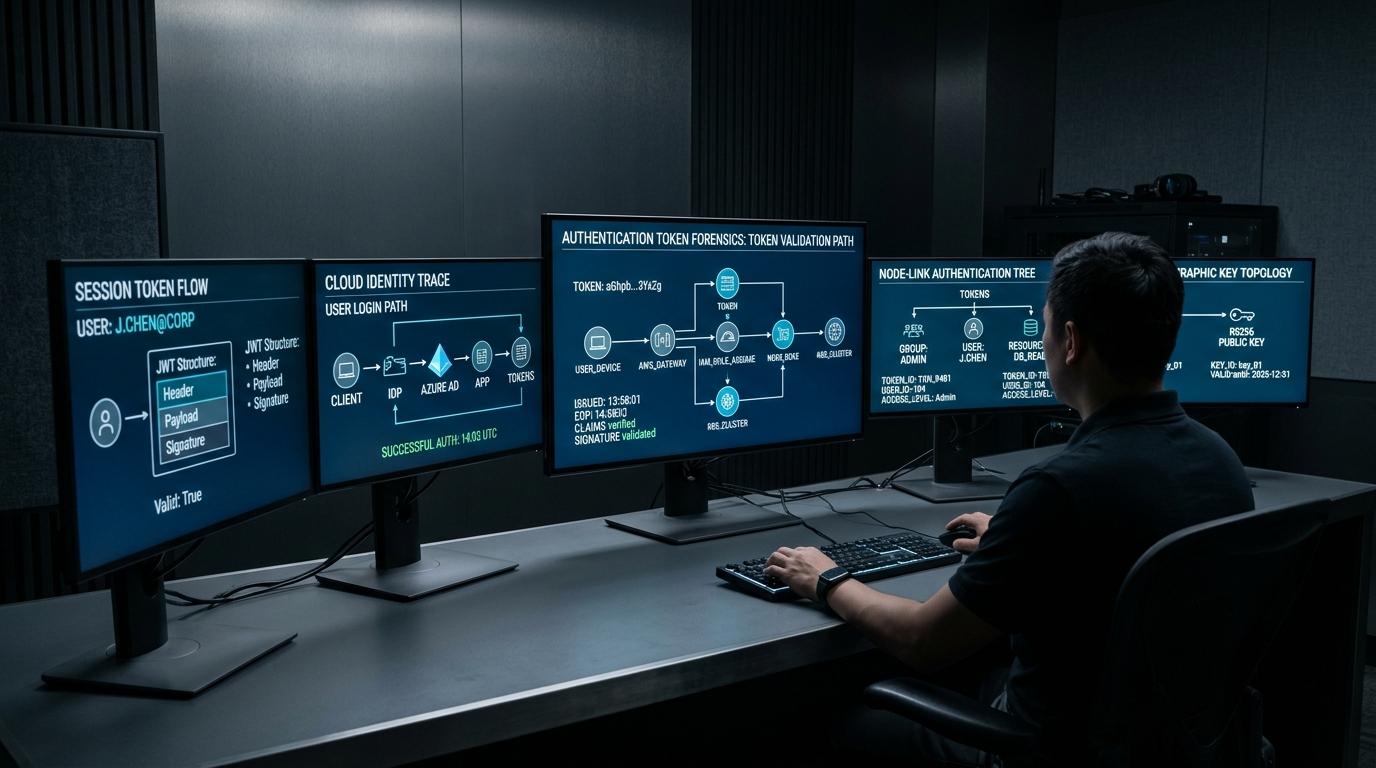
- The Infostealer Supply Chain: How LummaC2 and Stealc extract DPAPI-encrypted browser secrets
- MFA Invalidation: Why session cookie replay circumvents push notifications and SMS codes
- Hostile Tenant Eviction: Revoking OAuth refresh tokens via Continuous Access Evaluation (CAE)
The Paradigm Shift: From Credential Cracking to Token Theft
For decades, enterprise security protocols operated under a straightforward doctrine: enforce complex passwords, mandate periodic rotations, and enforce Multi-Factor Authentication (MFA). Today, that security perimeter has been effectively rendered obsolete by the industrialization of commodity infostealer malware.
Threat actors no longer invest computational resources into brute-forcing hashed credentials or orchestrating complex credential stuffing attacks. Instead, modern campaigns deploy lightweight, evasive infostealers—primarily LummaC2, Stealc, and RedLine—to harvest active, authenticated session tokens directly from the victim's operating system memory and local browser cache.
When an attacker acquires an active session cookie, they bypass the entire authentication gate. To the cloud identity provider (such as Microsoft Entra ID or Google Workspace), the attacker's HTTP request represents a user who has already successfully satisfied all password, biometric, and MFA challenges.
Anatomy of Browser Profile Extraction
Infostealers execute in user space without requiring administrative or root privileges. Once executed—frequently distributed via poisoned Google Ads, malicious PDF attachments, or trojanized software utilities—the payload immediately targets the local browser profile directory.
In Chromium-based browsers (Chrome, Edge, Brave), session cookies and master authentication credentials reside within SQLite database files located under `%LocalAppData%\Google\Chrome\User Data\Default\Network\Cookies`. While modern operating systems encrypt these values using Windows Data Protection API (DPAPI) or Chromium's App-Bound Encryption, the infostealer executes within the security context of the logged-in user and seamlessly decrypts the master key from the `Local State` file.
Within seconds, the malware packages the user's active session cookies, auto-fill databases, local wallet extensions, and system telemetry into a compressed archive, exfiltrating it via encrypted Telegram bots or clandestine command-and-control (C2) dead drops.
Why Password Resets and Standard MFA Fail
The most common mistake enterprise IT teams make when responding to an executive compromise is performing a simple password change. While intuitive, this action does not terminate the adversary's active foothold.
Because session tokens are cryptographically signed bearer tokens, application servers validate their validity based purely on cryptographic expiration timestamps and signature integrity. Unless the identity provider enforces dynamic token revocation, the attacker continues to access executive mailboxes, internal cloud repositories, and financial portals uninhibited.
Furthermore, modern stealers specifically harvest authorized OAuth enterprise application grants. An attacker will register a rogue third-party API application within the compromised tenant, granting themselves persistent `Mail.ReadWrite` or `User.ReadWrite.All` permissions. Even if the victim's session is severed, the attacker retains programmatic backdoor access through the authorized enterprise application ID.
The Hostile Eviction Playbook
Achieving true containment and hostile threat actor eviction requires executing a synchronized multi-stage incident response playbook:
1. Global Session Invalidation: Enterprise administrators must trigger global tenant sign-out commands (e.g. executing `Revoke-MgUserSignInSession` in PowerShell for Microsoft Entra environments). This explicitly invalidates all user refresh tokens and active authentication cookies.
2. OAuth Application & Consent Audit: Conduct an exhaustive review of all enterprise application consents. Terminate any anomalous service principals or app registrations created within the 30-day window surrounding the incident.
3. Endpoint Isolation & Forensics: Isolate the infected machine from the local network via EDR tooling to prevent secondary lateral movement, and capture physical RAM dumps for forensic attribution.
4. Enforcement of Continuous Access Evaluation (CAE): Configure identity providers to evaluate security posture continuously. Under CAE, critical events such as IP address anomalies or user disablement revoke access tokens within minutes rather than relying on static 1-hour expiration cycles.
5. Migration to Hardware-Bound FIDO2 Passkeys: Transition critical administrative perimeters from vulnerable SMS/app-based MFA to cryptographic FIDO2 hardware keys (Passkeys). Device-bound passkeys bind the authentication handshake to the physical hardware module, rendering remote cookie replay mathematically impossible.
"In the modern threat landscape, identity is the battlefield. Remediation must extend beyond password rotations to complete session invalidation, OAuth audit, and hardware-bound cryptographic authentication."
Julian Thorne
CISSP • GIAC Certified Incident Handler (GCIH)Directs complex technical investigations, court-admissible forensic reporting, and jurisdictional asset freezing actions across global institutional digital asset ecosystems.